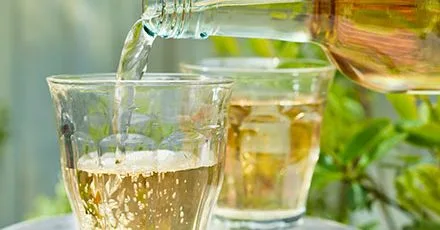
Elderflower wine
Per serving
Prepare your own tasty elderflower wine using our wonderful summer recipe. This exquisite alcoholic beverage is perfect for using our favorite seasonal ingredient.
Ingredients
4 serv.Step-by-step instructions
- 1
Read our instructions on cleaning brewing equipment and home-brewing safety tips before starting. Trim the elderflower heads from the stems using scissors or a wide-toothed comb and place them in a clean bucket.
- 2
Add the raisins, zest and lemon juice to the bucket. Dissolve the sugar and lemon acid in 2 L of boiling water and pour into the bucket. Cover and let steep for 8 hours or overnight.
- 3
Add the tea and 2.5 L of cold water, stir, then sprinkle the yeast. Cover and leave in a moderate (15‑20 °C) place, away from sunlight, to ferment until the foam subsides — usually this takes five days, but can last up to 14.
- 4
Transfer to a clean bucket or demijohn, leaving the sediment and flower heads behind. If needed, top up to 4.5 L with cooled boiled water. Seal tightly (a airlock lid is recommended). Let ferment, usually for six weeks (small bubbles are a visual indicator).
- 5
When the liquid stops bubbling and becomes slightly clearer, transfer to a clean bucket, leaving the sediment, and add the Campden tablet. Allow it to clear, which may take several months, then bottle into sterilized bottles. Store in a cool, dark place. The wine will improve up to 18 months. Fermentation should occur away from sunlight. The temperature should remain stable and mild (about 15‑20 °C) throughout fermentation.

The Prepka App Is Ready
All your recipes at your fingertips — in the Progressive Web App